Introduction
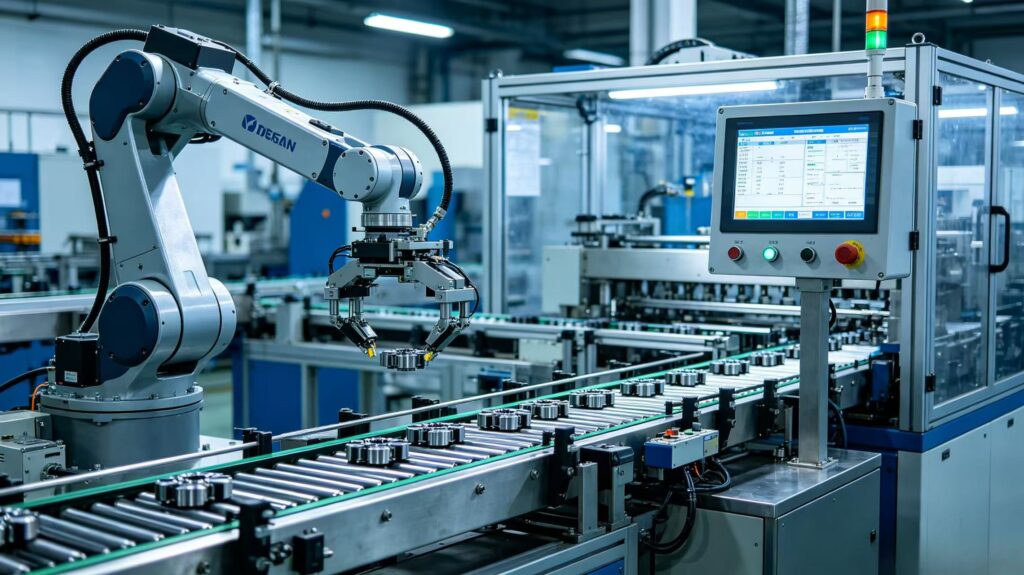
In today’s global manufacturing industry, industrial automation equipment plays a critical role inimproving productivity, precision, and cost efficiency. From automotive production lines topackaging systems and robotics integration, automation technology is reshaping how factoriesoperate.
Companies such as Siemens AG, ABB Ltd, and FANUC Corporation are leading the transformationtoward smart manufacturing and Industry 4.0.
At the core of these systems, precision mechanical parts, CNC components, and sheet metalfabrications are essential to ensure stability, accuracy, and long-term performance.
What Is Industrial Automation Equipment?
Industrial automation equipment refers to machines and systems designed to operatemanufacturing processes with minimal human intervention. These systems typically include:
●Industrial robots
●Automated assembly lines
●CNC machining systems
●Packaging and filling machines
●Welding automation systems
●Smart control systems (PLC, sensors, loT modules)
The goal is to increase production efficiency while reducing labor costs and human error.
Key Applications of Automation Equipment
1.Robotics & Smart Manufacturing
Robotic systems are widely used in welding, assembly, and material handling. These systems require high-precision components such as:
●Robot arm joints
●Base frames
●Precision machined brackets●Structural sheet metal housings
2.Packaging Machinery Industry
Automation is heavily used in food, beverage, and pharmaceutical packaging. Machines must operate continuously at high speed, requiring:
●Laser-cut machine frames
●Stainless steel enclosures
●Conveyor system components
●Customized mechanical fixtures
3.CNC & Precision Machining Systems
CNC machines are the backbone of modern manufacturing. Automation enhances their performance through:
●Automatic tool changers
●Machine enclosures
●High-rigidity machine bases
●Vibration-resistant structural parts
4.Logistics & Warehousing Automation
Smart warehouses rely on automated sorting systems, AGVs (Automated Guided Vehicles), andconveyor systems. These systems depend on:
●Lightweight aluminum structures
●Welded frames
●Durable sheet metal covers
Why Precision Parts Matter in Automation Systems
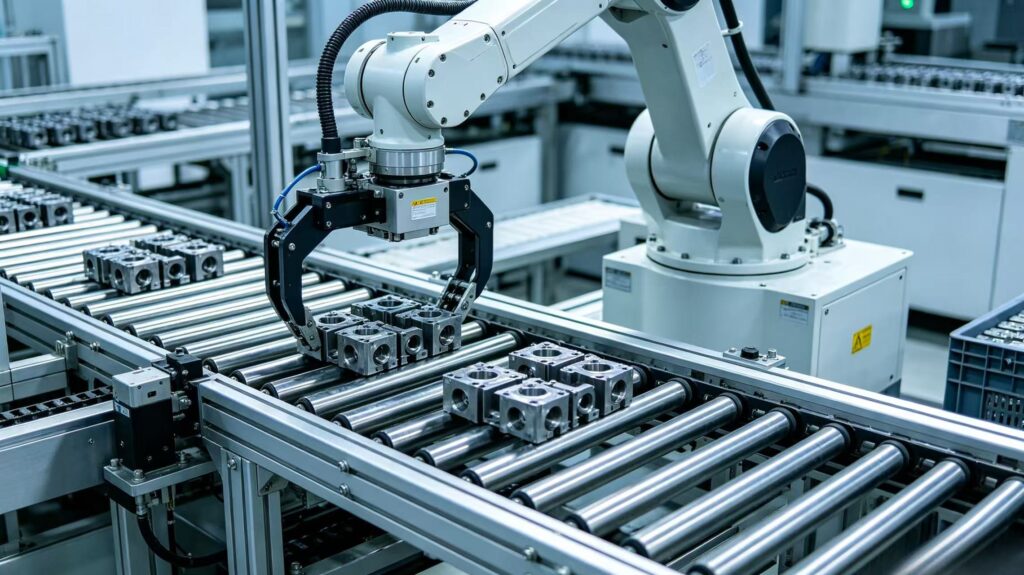
Automation equipment must operate 24/7 under high loads. Even small deviations in componentaccuracy can lead to system failure.
That is why manufacturers rely on:
●CNC machined components for tight tolerances
●Laser cutting parts for structural accuracy
●Welded assemblies for strong mechanical stability
●Surface-treated parts for corrosion resistance
High-quality components directly determine the reliability and lifespan of automation systems.
Our Manufacturing Capability
We specialize in supplying high-quality components for the automation industry, including:
●CNC machining parts (turning & milling)
●Laser cutting sheet metal parts
●Welded structural assemblies
●Machine frames and enclosures
●Custom precision components based on drawings or samples
With strong engineering capability and export experience, we support automation equipmentmanufacturers worldwide.
Industry Outlook: The Future of Automation
The global automation market continues to grow rapidly, driven by:
●Rising labor costs
●Demand for high productivity
●Expansion of smart factories
●Development of Al and robotics
In the next decade, automation will become standard across nearly all manufacturing industries.
Companies like KUKA AG are already integrating Al-driven robotic systems, making factoriessmarter and more flexible.
Conclusion
Industrial automation equipment is transforming global manufacturing, and high-precisionmechanical components are at the heart of this transformation. As automation systems becomemore advanced, the demand for reliable CNC machining and sheet metal fabrication will continue toincrease.
If you are looking for a reliable manufacturing partner for automation equipment components, weare ready to support your next project with precision, consistency, and fast delivery.