
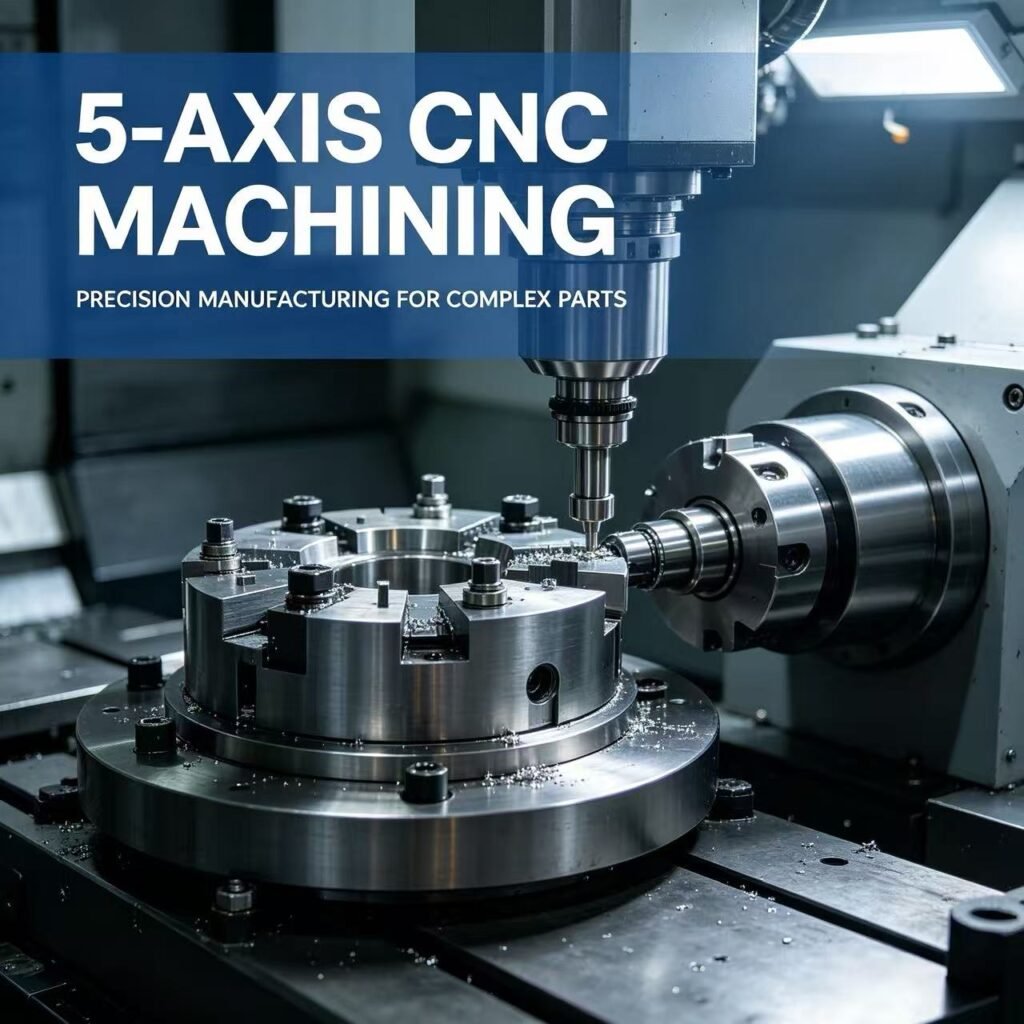
As precision manufacturing continues to develop, 5-axis CNC machining is becomingincreasingly important for producing complex and high-precision components.
But what exactly is 5-axis machining? How is it different from 3-axis machining? And when should manufacturers choose 5-axis CNC machining?
What Is 5-Axis CNC Machining?
5-axis CNC machining is an advanced manufacturing process that allows a CNC machine tocontrol movement along five axes simultaneously or in a coordinated sequence.
Traditional 3-axis CNC machining mainly controls the X, Y and Z linear axes. A 5-axis machineadds two rotary axes, allowing the cutting tool or workpiece to move and rotate from different angles.
In simple terms:
3-axis machining: The cutting tool mainly approaches the workpiece from fixed directions.
5-axis machining: The tool can change its angle and approach the workpiece from multiple directions.
This makes 5-axis CNC machining particularly suitable for complex surfaces, angled features,deep cavities and precision components with multiple machining faces.
What Are the Advantages of 5-Axis CNC Machining?
1.Fewer Setups
Complex parts may require multiple setups when manufactured with conventional machining.5-axis machining can access multiple surfaces in a single setup, reducing repositioning and setup time.
2.Improved Accuracy
Fewer setups can help reduce positioning errors caused by repeated clamping and realignment.
This is particularly valuable for high-precision CNC components.
3.Complex Surface Machining
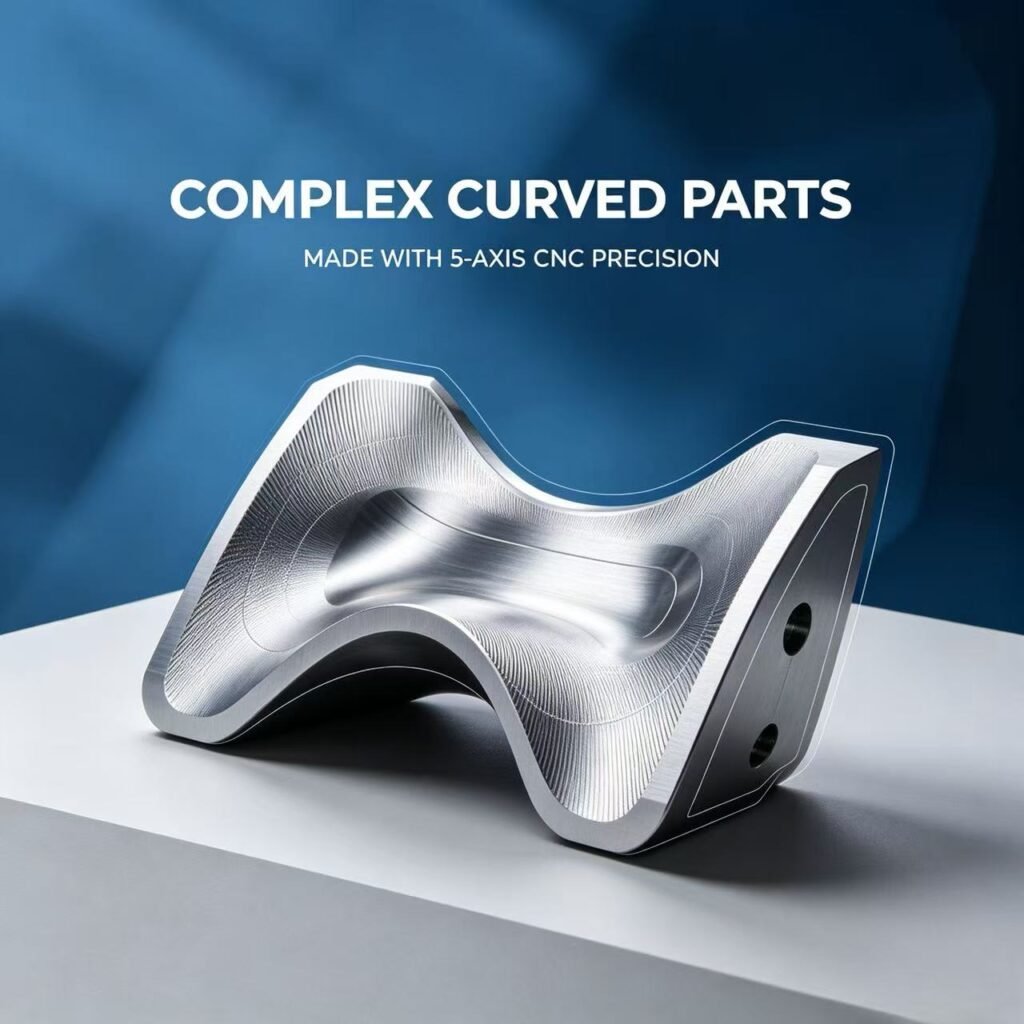
5-axis CNC machining provides greater flexibility when producing components with complex curves, inclined surfaces and multi-angle features.
It is widely used for aerospace components, robotic parts, medical components and complex mechanical parts.
4.Higher Machining Efficiency
By accessing different areas of a workpiece without repeatedly changing its position, 5-axismachining can combine multiple operations and potentially reduce overall production time.
5.Better Surface Finish
The cutting tool can maintain a more suitable angle relative to complex surfaces, which canimprove machining stability and surface finish in many applications.
What Parts Are Suitable for 5-Axis CNC Machining?
Not every component requires 5-axis machining. However, it can provide significantadvantages for parts with complex geometries, multiple machining directions or demanding precision requirements.
Typical applications include:
Aerospace Components
Aerospace parts often contain complex surfaces and multi-angle features that require accurate and controlled machining.
Robotics Components
Robot joints, brackets, connectors and structural components may require machining from multiple directions.
Medical Device Components
Some medical components feature complex geometries and tight dimensional requirements,making precision CNC machining an important manufacturing solution.
Automotive Components
Certain automotive components, prototypes and tooling parts can benefit from the flexibility of 5-axis machining.
Precision Mechanical Parts
Components with deep cavities, inclined surfaces, multi-angle holes or complex geometries can often be manufactured more efficiently using 5-axis machining.
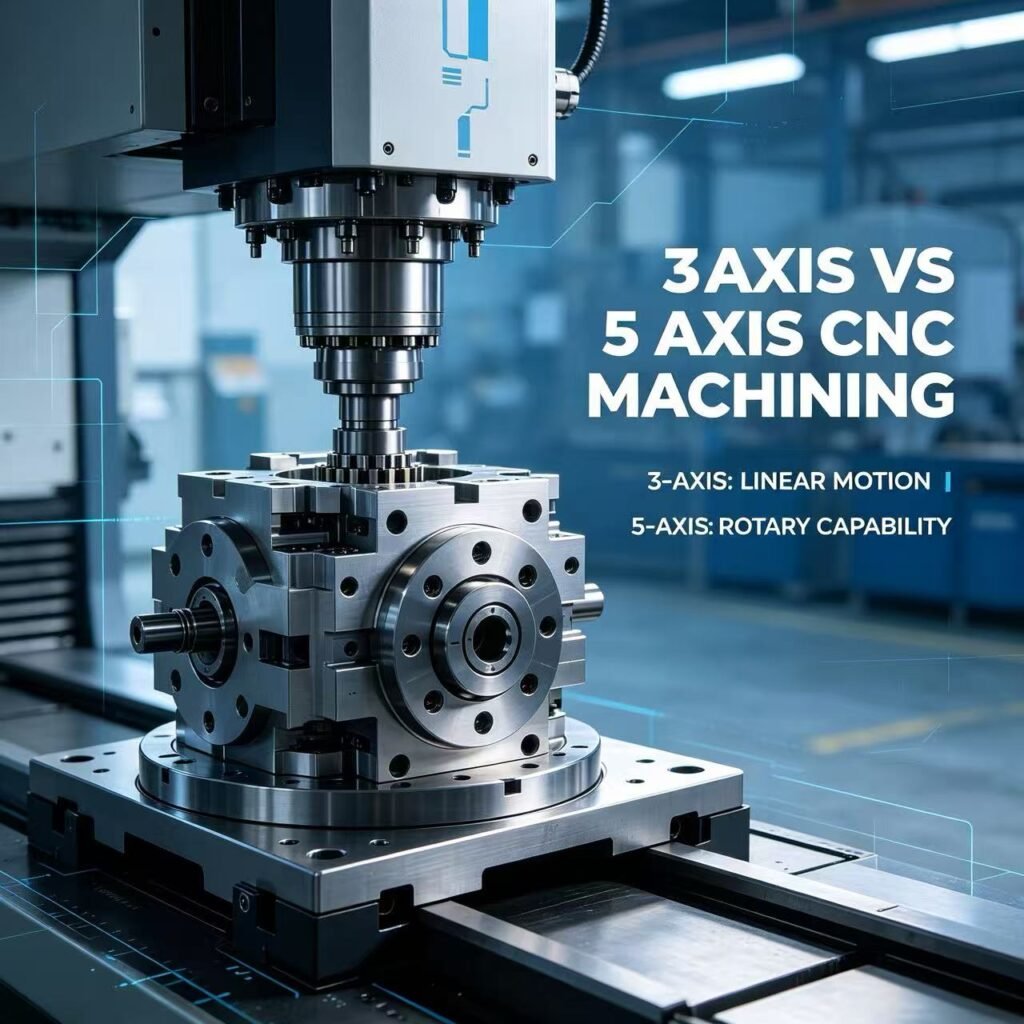
5-Axis CNC Machining vs. 3-Axis CNC Machining
3-axis CNC machining is widely used for conventional parts with flat surfaces, holes, slots andrelatively simple geometries.
5-axis CNC machining is better suited to complex surfaces, multi-angle structures and components where fewer setups are beneficial.
Therefore, 5-axis machining is not automatically better than 3-axis machining. The appropriate process depends on the part geometry, tolerance requirements, material,production volume and overall manufacturing requirements.
What Does 5-Axis Machining Require?
Successful 5-axis machining involves more than simply having a 5-axis machine.
A reliable manufacturing process may require:
●5-axis CNC machining equipment
●Professional CAM programming
●Proper cutting tool selection
●Optimized machining parameters
●Custom fixtures and workholding
●Accurate workpiece positioning
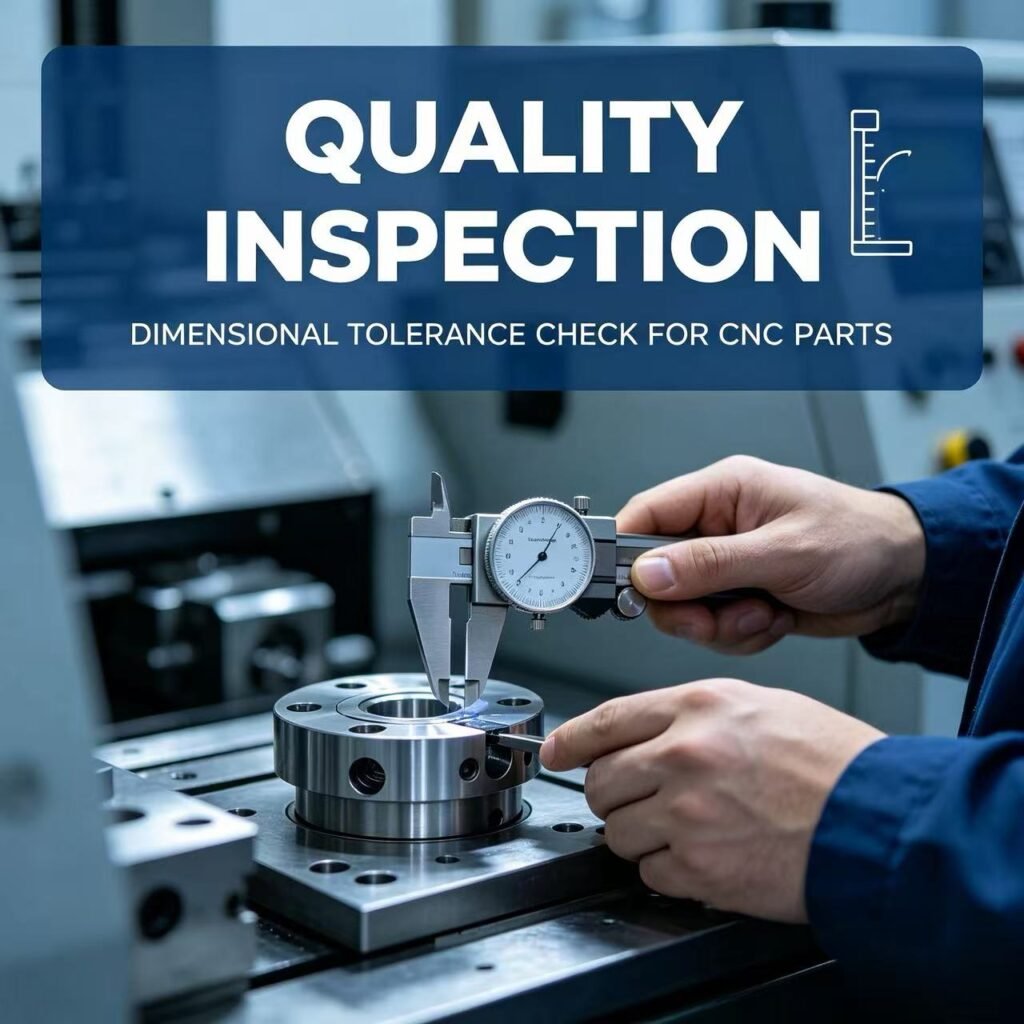
●Dimensional inspection
●Strict quality control
For complex components, toolpath design and machining strategy can have a significantimpact on production efficiency, dimensional accuracy and surface quality.
Why Use 5-Axis CNC Machining for Precision Parts?
For manufacturers of CNC precision parts, one of the key benefits of 5-axis machining is itsability to handle complex geometries more efficiently.
When a component requires machining from multiple directions, conventional processes may require several setups.
With 5-axis machining, the tool and workpiece can be repositioned through multiple rotarymovements, allowing more features to be machined with fewer setups.
This makes 5-axis CNC machining valuable for precision components used in:
●Robotics
●Automation equipment
●Aerospace
●Medical devices
●Drones
●Industrial machinery
How to Choose a 5-Axis CNC Machining Supplier?
When selecting a 5-axis CNC machining supplier, consider more than just the equipment.
Machining Capability
Confirm that the manufacturer has actual 5-axis machining capabilities suitable for your component geometry.
CAM Programming Experience
Complex 5-axis parts require professional CAM programming and optimized toolpaths.
Quality Control
A reliable supplier should have appropriate inspection equipment and quality-control procedures.
Material Experience
Experience with materials such as aluminum, stainless steel, titanium and engineering plastics
can be important depending on your application.
Delivery Management
Stable production planning and reliable delivery are also important when CNC components are
part of a larger equipment assembly schedule.
Conclusion
The key advantage of 5-axis CNC machining is not simply having two additional axes. Its realvalue lies in the ability to control the relationship between the cutting tool and workpiece from multiple directions.
For complex surfaces, multi-angle structures, deep cavities and precision componentsrequiring fewer setups, 5-axis machining can provide an efficient and flexible manufacturing solution.
If you need custom 5-axis CNC machining, precision CNC parts or complex machinedcomponents, you can send us your 2D drawings or 3D CAD files. We can evaluate the partgeometry, material, quantity and tolerance re aments and recommend a suitable machining solution.